Benjamin Graham Formula Calculator
I built this simple tool to help you instantly calculate the Intrinsic Value of a stock using the legendary Benjamin Graham's method.
Simple Ben Graham Calculator
Simple Ben Graham Calculator in 3 Simple Steps
I've broken down the process so anyone can understand it. Here is how it works:
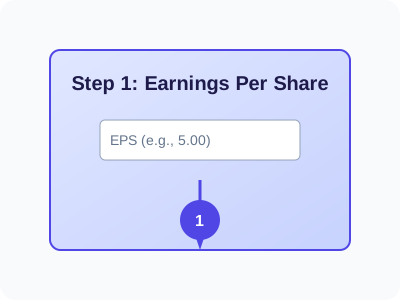
Step 1: Find the EPS
First, I look for the Earnings Per Share (EPS). This tells me how much profit the company makes for each share of stock. You can find this on any financial website.
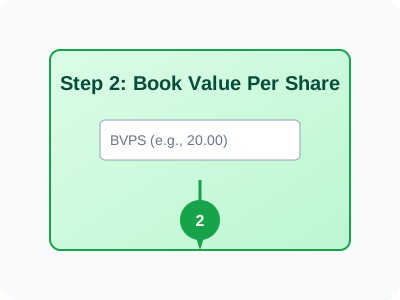
Step 2: Find the BVPS
Next, I need the Book Value Per Share (BVPS). This represents the net asset value of the company per share. It's a measure of what the company would be worth if it were liquidated today.
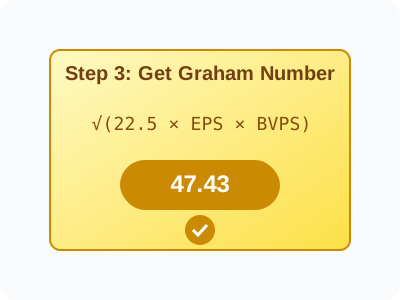
Step 3: Calculate!
Finally, I multiply EPS by BVPS, then by 22.5, and take the square root. Or better yet, I just use the Benjamin Graham calculator above to do the math instantly!
I Analyzed the Benjamin Graham Formula
When I first started investing, I was overwhelmed by complex valuation models. Then I discovered the Benjamin Graham Formula. Graham, known as the "Dean of Wall Street" and Warren Buffett's mentor, believed in buying stocks for less than they were worth.
The Graham Number is his classic "back-of-the-napkin" calculation to find the fair value of a defensive stock. It's incredibly powerful because it combines both earnings (EPS) and assets (BVPS) into a single valuation metric.
A Real Benjamin Graham Formula Example
Let's say I'm looking at a company with an EPS of $4.00 and a Book Value of $25.00. Is it a buy? Let's run the numbers:
- EPS: $4.00
- BVPS: $25.00
- Constant: 22.5
The calculation would be: √(22.5 × 4 × 25) = √(2250) ≈ $47.43.
So, the Graham Number Value is $47.43. If the stock is trading at $40, it might be undervalued. If it's trading at $60, I'd probably stay away.
Why I Trust This Calculator
I built this Benjamin Graham Calculator because I wanted a tool that was simple, fast, and accurate. I didn't want to manually punch numbers into a spreadsheet every time I analyzed a stock. This tool does exactly what Graham intended: it gives you a quick "yes or no" check on price.
More Popular Calculators
Check out these other powerful tools to help you find the fair value of stocks.
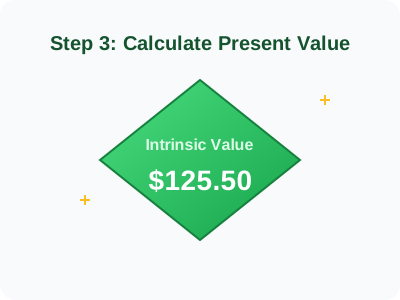
Discounted Cash Flow (DCF)
The gold standard for valuation. Estimate intrinsic value based on future free cash flows.
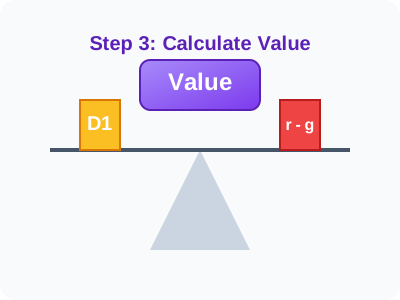
Dividend Discount Model (DDM)
Perfect for dividend stocks. Use the Gordon Growth Model to value stable dividend payers.

Stock Valuation Calculator
A comprehensive tool to estimate fair value using multiple metrics and methods.
Common Questions
Frequently Asked Questions
Here are some of the most common questions I get about using the Benjamin Graham formula.