Dividend Discount Model Calculator
I built this simple tool to help you value dividend-paying stocks instantly using the Gordon Growth Model.
Simple DDM Calculator
Dividend Discount Model (DDM) Calculator in 3 Simple Steps
I've simplified the valuation process into three easy steps:
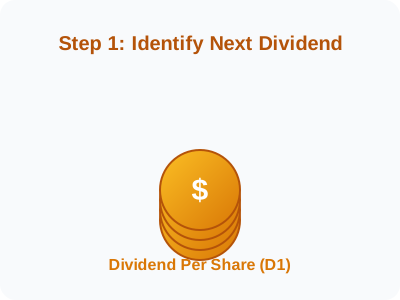
Step 1: Identify Next Dividend
First, I find the expected dividend per share for the next year (D1). If I only know the current dividend, I can estimate D1 by adding the expected growth.
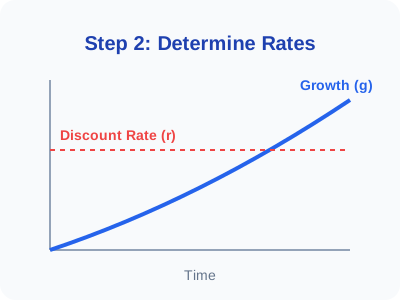
Step 2: Determine Rates
Next, I decide on my required Discount Rate (r) (my expected return) and the company's long-term Growth Rate (g). The discount rate must be higher than the growth rate.
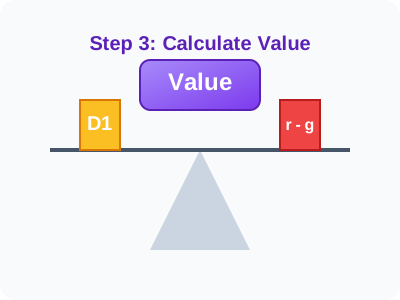
Step 3: Calculate Value
Finally, I plug these numbers into the formula: D1 / (r - g). Or better yet, I use the calculator above to instantly see the stock's fair value!
Why I Love the Dividend Discount Model
As an investor who loves cash flow, the Dividend Discount Model (DDM) is one of my favorite tools. It cuts through the noise of market sentiment and focuses on what really matters: the cash the company pays you.
The logic is simple: a stock is worth the sum of all the dividends it will ever pay you, adjusted for the time value of money. If you can buy that stream of cash for less than it's worth, you've found a deal.
A Real DDM Example
Let's say I'm looking at a utility company. It pays a dividend of $2.00, and I expect it to grow at 3% per year. My required return (discount rate) is 8%.
- Next Dividend (D1): $2.06 ($2.00 * 1.03)
- Discount Rate (r): 8% (0.08)
- Growth Rate (g): 3% (0.03)
The calculation is: 2.06 / (0.08 - 0.03) = 2.06 / 0.05 = $41.20.
If the stock is trading at $35, it looks undervalued to me!
Limitations to Keep in Mind
I built this DDM Calculator to be simple and effective, but it has limits. It works best for stable companies. If a company doesn't pay dividends, or if its growth is wild and unpredictable, this model won't give you a reliable answer. In those cases, I'd use a Discounted Cash Flow (DCF) model instead.
More Popular Calculators
Check out these other powerful tools to help you find the fair value of stocks.
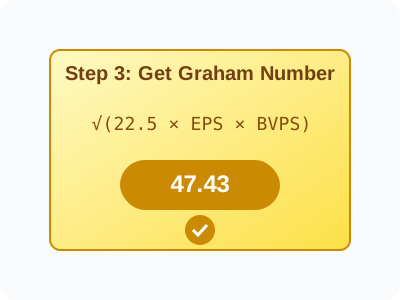
Benjamin Graham Formula
The classic formula from the "Dean of Wall Street". Perfect for defensive investors.
Discounted Cash Flow (DCF)
The gold standard for valuation. Estimate intrinsic value based on future free cash flows.
Stock Valuation Calculator
A comprehensive tool to estimate fair value using multiple metrics.
Common Questions
Frequently Asked Questions
Here are the answers to the most common questions I get about the Dividend Discount Model.