Dividend Calculator
I built this tool to help you visualize the "Snowball Effect" of dividend investing. See exactly how much passive income you could be making in the future.
Dividend Calculator
See how your dividends can snowball over time.
Dividend Calculator in 3 Simple Steps
I've designed this process to be as intuitive as possible. Here is how I use it to plan my own dividend portfolio.

1. Input Your Data
Enter your current share price, number of shares, and dividend yield. Don't forget to add your expected annual contribution!

2. Toggle DRIP
This is where the magic happens. Toggle "Reinvest Dividends" to see how reinvesting can exponentially grow your share count.
3. Visualize Growth
Check the chart to see your "Annual Dividend Income" line (in green) take off. That's your future passive income stream!
Why I Love Dividend Investing
I've analyzed countless investment strategies, but few are as satisfying as dividend investing. There's something incredibly powerful about getting paid just for owning a piece of a company. It's the truest form of "passive income."
When I use this Dividend Calculator, I'm not just looking at numbers; I'm looking at my future freedom. The goal isn't just a high portfolio value—it's building an income stream that can cover my expenses without me having to sell a single share.
The Power of DRIP (Dividend Reinvestment Plan)
You might have noticed the "Reinvest Dividends" toggle in my calculator. I strongly recommend you keep it ON. Here is why:
- Compounding Shares: When you reinvest, you buy more shares.
- Compounding Income: Those new shares pay more dividends next time.
- The Snowball: Over 20-30 years, this cycle creates a massive "snowball" of wealth that is hard to beat.
How to Calculate Dividend Yield
If you're looking at a stock and want to know its yield manually, the math is simple. I use this formula all the time when screening stocks:
For example, if a company pays $2.00 per year in dividends and the stock price is $50.00, the yield is 4% ($2 / $50 = 0.04).
Dividend Payout Ratio: Is the Dividend Safe?
One thing my calculator assumes is that the dividend is safe. But in the real world, you need to check. I always look at the Payout Ratio.
The Payout Ratio tells you what percentage of earnings the company pays out as dividends.
- ✓Less than 60%: Generally considered very safe. The company has plenty of room to grow the dividend.
- !60% - 90%: Getting tight. Common for utilities or REITs, but watch out for regular stocks in this range.
- ✕Over 100%: Unsustainable. The company is paying out more than it earns. I usually avoid these.
More Popular Calculators
Check out these other powerful tools to help you optimize your investment strategy.
DRIP Calculator
Visualize the "Snowball Effect" of reinvesting dividends. Compare returns with and without DRIP.

Dividend Snowball Calculator
See how fast your passive income can grow. Calculate your Yield on Cost and future income.
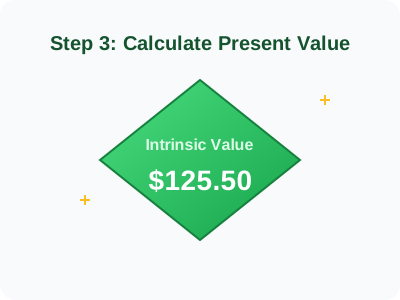
Discounted Cash Flow (DCF)
The gold standard for valuation. Estimate intrinsic value based on future free cash flows.
Frequently Asked Questions
What is a good dividend yield?
I typically look for yields between 2% and 5%. Anything lower might not provide enough income, while anything higher (like 8%+) can be a 'yield trap' signaling the company is in trouble. Context matters, though—REITs often pay higher yields safely.
How often are dividends paid?
Most US companies pay dividends quarterly (four times a year). However, some pay monthly (great for bills!) and others pay semi-annually or annually. My calculator assumes annual compounding for simplicity, which is a close approximation.
Do I have to pay taxes on dividends?
Yes, usually. In the US, 'qualified' dividends are taxed at the long-term capital gains rate (0%, 15%, or 20%), while 'ordinary' dividends are taxed at your regular income tax rate. I've included a tax rate input in the calculator so you can see your after-tax results.
What is Dividend Growth Rate?
This is the percentage by which a company increases its dividend payment each year. I love companies that grow their dividends by 5-10% annually. It protects my income from inflation.
Start Your Passive Income Journey
Don't wait for the "perfect" time. The earlier you start, the harder your dividends work for you.
Calculate My Dividends