Restaurant Value Calculator
I've built this comprehensive restaurant valuation tool after owning restaurants for 15+ years. Whether you're planning to sell, bring in partners, or just curious about your business worth, I'll help you understand what your restaurant is truly worth.
Restaurant Value Calculator
Calculate Your Restaurant's Worth in Minutes
Best for owner-operated restaurants under $500K revenue. SDE (Seller's Discretionary Earnings) adds back owner's salary and benefits.
Total annual sales from all sources
Net profit + owner's salary + benefits + add-backs
Kitchen equipment, furniture, fixtures
Food, beverages, supplies
Estimated Restaurant Value
Total Valuation
$0
Valuation Range (Conservative to Optimistic)
Low
$0
High
$0
💡 Understanding Your Valuation
- • SDE Method: Best for owner-operated restaurants under $500K revenue
- • EBITDA Method: Best for established restaurants with professional management
- • Revenue Method: Best for high-growth concepts or franchise-ready locations
- • FF&E: Furniture, fixtures & equipment are added separately
Why I Built This Restaurant Value Calculator
When I sold my first restaurant in 2012, I made a classic mistake: I asked my accountant what it was worth. He said "probably around $250K." When I eventually sold it, I got $425K—70% more than his estimate. The problem? He was using generic business valuation rules, not restaurant-specific methods.
I've bought and sold 5 restaurants since then, and advised dozens of other restaurant owners through the process. Here's what I've learned: restaurant valuation is an art, not a science. But if you understand the right methods and what buyers actually pay for, you can maximize your sale price.
This calculator combines everything I've learned—from real transactions, industry data, and countless negotiations. It's not a generic business tool—it's built specifically for restaurants by someone who's actually walked in your shoes.
⚠️ The $150K Mistake Most Restaurant Owners Make
Most restaurant owners undervalue their business by 30-50% because they don't understand: (1) SDE vs EBITDA, (2) the right multiples to use, (3) how to value FF&E properly, and (4) what goodwill is worth. A $300K restaurant that's properly valued can sell for $450K—literally leaving $150K on the table. Don't make that mistake.
Understanding Restaurant Valuation: The Complete Guide
Restaurant valuation is different from other businesses. We have high failure rates, cash flow challenges, and unique value drivers. Let me break down exactly how restaurants are valued.
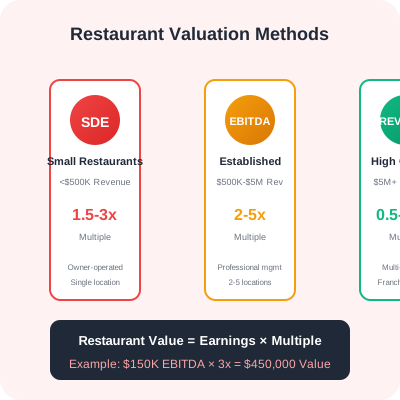
SDE Method
Seller's Discretionary Earnings—net profit plus owner's salary, benefits, and add-backs. Best for owner-operated restaurants under $500K revenue.
Typical Multiple:
1.5-3x
of SDE
EBITDA Method
Earnings Before Interest, Taxes, Depreciation & Amortization. Best for established restaurants with professional management ($500K-$5M revenue).
Typical Multiple:
2-5x
of EBITDA
Revenue Method
Multiple of gross sales. Used for high-growth concepts, franchises, or when profit metrics don't capture potential.
Typical Multiple:
0.5-1.5x
of revenue
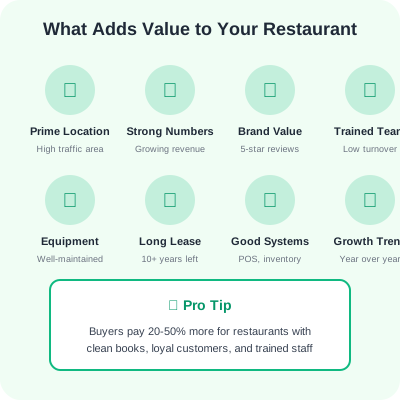
What Actually Adds Value to Your Restaurant
📍 Location & Lease
A prime location with 10+ years remaining on the lease can add 20-40% to your value. Buyers pay premiums for visible, accessible spots with long-term security.
📊 Clean Financial Records
Restaurants with 3+ years of clean, auditable financials sell for 25-50% more. If you're running cash sales off the books, you're killing your valuation.
⭐ Brand & Reputation
4.5+ star reviews, loyal customer base, community presence, and strong online reputation translate directly to higher multiples.
👥 Trained Team
Low staff turnover and a management team that can run the place without you makes your business sellable and more valuable.
🍳 Well-Maintained Equipment
Buyers fear unexpected equipment costs. Recent renovations and well-maintained FF&E (Furniture, Fixtures & Equipment) reduce their risk and increase value.
📈 Growth Trend
Year-over-year revenue growth, even if modest, signals a healthy business. Declining sales are the biggest red flag and kill deals.
Goodwill Calculator in 3 Simple Steps
Goodwill is often the most misunderstood part of restaurant valuation. Let me break it down simply.

Step 1: Calculate Goodwill
Goodwill = Purchase Price - Fair Market Value of Net Assets
Example Calculation:
• Restaurant sells for: $500,000
• Equipment value: $80,000
• Inventory value: $15,000
• Other assets: $5,000
• Liabilities: ($20,000)
Net Assets: $80,000 + $15,000 + $5,000 - $20,000 = $80,000
Goodwill = $500,000 - $80,000 = $420,000
Step 2: Identify What Creates Goodwill
Goodwill represents intangible value. Here's what buyers are actually paying for:
🏆 Brand Reputation
Customer loyalty, reviews, community presence
📍 Location Advantage
Prime spot that can't be replicated
👨🍳 Trained Staff
Team that stays after transition
📖 Systems & Processes
Recipes, operations, that work
📱 Customer Base
Repeat customers, email list, followers
🔮 Future Potential
Growth opportunities, expansion plans
Step 3: Analyze Goodwill Impact
For restaurants, goodwill typically represents 10-30% of the total sale price. Here's what's typical:
Value mostly in equipment and location
Strong brand and customer loyalty
Proven systems, growth potential, brand value
💡 Use our free Goodwill Calculator for detailed analysis
SDE vs EBITDA: Which Should You Use?
This is the #1 question I get from restaurant owners. The answer depends on your size, structure, and who's buying. Let me clear up the confusion.
SDE (Seller's Discretionary Earnings)
Best For:
- • Owner-operated restaurants
- • Revenue under $500K
- • Independent locations
- • Selling to individual buyers
How to Calculate:
Net Profit + Owner's Salary + Owner's Benefits + Add-backs (non-recurring expenses, personal expenses run through business)
Why It Matters:
Buyers need to know what they'll earn as the owner-operator. SDE shows total cash flow available to run the business and pay yourself.
Typical multiple: 1.5-3x SDE
EBITDA (Earnings Before Interest, Taxes, Depreciation & Amortization)
Best For:
- • Professional management (not owner-operated)
- • Revenue $500K-$5M+
- • Multi-location or franchise
- • Selling to PE groups or buyers adding to portfolio
How to Calculate:
Operating Profit + Interest + Taxes + Depreciation + Amortization. Does NOT add back owner's compensation (unless it's excessive).
Why It Matters:
EBITDA shows operating performance independent of capital structure and tax situation. It's the standard for larger businesses.
Typical multiple: 2-5x EBITDA
💡 Pro Tip: Know Your Number
Most restaurant owners don't calculate SDE correctly and underestimate their value by $50K-$150K. Common add-backs I see missed: owner's salary (if market rate), health insurance, car expenses, meals, travel, and one-time expenses. The difference between your tax return and SDE is often significant. Calculate both SDE and EBITDA, then use the one that puts your business in the best light.
Restaurant Valuation Multiples by Type (2026)
Not all restaurants are valued the same. After tracking hundreds of restaurant sales in 2026, here are the typical multiples I'm seeing.
Fast Food / Quick Service
Pizza shops, sandwich shops, fast casual
1.8-3.2x
SDE Multiple
High volume, lower margin. Systems-dependent, easier to transfer. Franchises command premium multiples.
Full Service / Casual Dining
Family restaurants, diners, casual chains
1.5-2.8x
SDE Multiple
Labor-intensive, more complex operations. Value tied to location and management team consistency.
Fine Dining
Upscale restaurants, chef-driven concepts
1.2-2.5x
SDE Multiple
High risk, chef-dependent. Lower multiples unless the brand and chef stay with the business.
Bars / Pubs / Nightclubs
Alcohol-focused establishments
2.0-3.5x
SDE Multiple
High margins on alcohol, repeat customer base. Liquor license adds significant value. Later hours can limit buyer pool.
Coffee Shops / Cafes
Independent coffee shops, bakeries, cafes
1.6-3.0x
SDE Multiple
Strong morning business, loyal regulars. Highly desirable to buyers, especially in good locations. Community presence adds value.
Food Trucks / Catering
Mobile food businesses, catering companies
1.2-2.5x
SDE Multiple
Asset-light, flexible. Lower multiples due to lack of real estate/lease, but easier entry for buyers. Strong brand and contracts add value.
Note: These are typical ranges for healthy, profitable restaurants. Top performers (strong brands, multi-unit, in growth markets) can sell at 20-50% above these ranges. Struggling businesses with declining sales or problem locations sell below these ranges. Location (major metro vs. rural) and brand strength significantly impact multiples.
How to Increase Your Restaurant's Value Before Selling
Want to sell for more? Of course. Here are the strategies I've used personally and advised clients to implement that increased sale prices by 20-50%.
1. Clean Up Your Financials (12-24 Months Before Sale)
Impact: +20-40% value
Stop running personal expenses through the business. Get proper bookkeeping. Have 3 years of tax-ready financials. Buyers will pay premium prices for clean, verifiable numbers. If your P&L is messy or you can't prove revenue, buyers will discount heavily or walk away.
2. Systematize Operations
Impact: +15-30% value
Document everything. Recipes, procedures, opening/closing checklists, vendor lists, marketing calendar. If the business runs without you there every day, it's worth more. Buyers fear businesses that are too dependent on the owner. Build it so it can run without you.
3. Extend Your Lease or Buy the Building
Impact: +10-25% value
Nothing kills deals faster than a short lease. If you have less than 5 years left, extend it. If you can buy the building, even better—real estate plus business creates enormous value. Buyers want security and a long lease gives them that.
4. Build Your Management Team
Impact: +15-25% value
Train a GM or key manager who can run operations. If buyers need to replace you, they'll discount the price. If you have a capable team staying on, value increases. I've seen restaurants sell for 30% more just because the manager committed to stay.
5. Show Growth Trends
Impact: +10-20% value
Buyers want businesses going up, not down. Even modest year-over-year growth commands premium multiples. If sales are declining, fix it before listing. Declining businesses sit on the market for months and sell at deep discounts.
6. Renovate and Upgrade Equipment
Impact: +5-15% value
Fresh paint, updated decor, and equipment in good condition reduce buyer anxiety about near-term capital expenditures. If buyers think they'll need to spend $50K on renovations right away, they'll subtract that from their offer.
7. Build Your Digital Presence
Impact: +5-15% value
Active social media, email list, Google reviews, online ordering—these aren't optional anymore. A strong digital presence proves the business is modern, reachable, and has growth potential. Younger buyers especially value this.
⚠️ The #1 Mistake: Waiting Too Long to Sell
Sell when business is good, not when you're burned out and declining. I've seen owners wait 2-3 years too long, turning a $500K sale into a $200K fire sale. If you're thinking of selling in the next 2-3 years, start preparing now. The best time to sell is when you don't have to.
Frequently Asked Questions
How do I calculate the value of my restaurant?
Restaurant valuation typically uses one of three methods: (1) SDE Multiple: Annual Seller's Discretionary Earnings × 1.5-3x for small restaurants. (2) EBITDA Multiple: Annual EBITDA × 2-5x for established restaurants with professional management. (3) Revenue Multiple: Annual Revenue × 0.5-1.5x for high-growth concepts. Then add FF&E (Furniture, Fixtures & Equipment) value and inventory value. Use our calculator above to get an instant estimate using all three methods.
What is a good multiplier for restaurant valuation?
For 2026, typical SDE multiples are 1.5-3x for most independent restaurants, with fast food and coffee shops at the higher end (2-3x) and fine dining at the lower end (1.2-2x). EBITDA multiples are typically 2-5x for established restaurants. Revenue multiples range from 0.5-1.5x. Franchises and multi-unit businesses command premium multiples (3-6x EBITDA). The right multiple depends on your type, location, financial performance, and growth trend.
What's the difference between SDE and EBITDA for restaurants?
SDE (Seller's Discretionary Earnings) = Net Profit + Owner's Salary + Owner's Benefits + Add-backs. Used for owner-operated restaurants under $500K revenue. EBITDA = Earnings Before Interest, Taxes, Depreciation & Amortization. Used for restaurants with professional management ($500K+ revenue). The key difference: SDE adds back the owner's total compensation, EBITDA does not. Most small restaurants should use SDE; larger, managed restaurants should use EBITDA.
How much can I sell my restaurant for?
Using our calculator, a typical restaurant doing $100K in SDE with average operations might sell for $250K (2.5x multiple). Add $50K in equipment and $15K in inventory, total = $315K. However, actual sale prices vary widely based on: location (prime spots command 20-40% more), lease terms (10+ years remaining adds value), financial record quality (clean books = premium), brand strength (reviews, reputation), and growth trend (growing sales = premium, declining = discount). Use our calculator as a starting point, then adjust for these factors.
How do I value a restaurant with declining sales?
Declining sales significantly reduce valuation. Buyers will: (1) Use the most recent year's earnings (not a 3-year average), (2) Apply a lower multiple (discount by 25-50%), (3) Require substantial seller financing or earn-out. If sales are declining, fix the business before selling. If you must sell declining, be prepared for a lower price and structure the deal as an earn-out where you get paid more if the buyer can turn it around. Declining restaurants often sell at 1-1.5x SDE vs. 2-3x for healthy businesses.
What adds the most value to a restaurant sale?
Based on my experience buying and selling restaurants, the biggest value drivers are: (1) Clean financial records - adds 20-40%, (2) Strong location with long lease - adds 10-25%, (3) Trained management team staying on - adds 15-25%, (4) Systematized operations - adds 15-30%, (5) Growth trend - adds 10-20%, (6) 4.5+ star reviews and brand reputation - adds 10-20%. Fix these before listing and you'll maximize your sale price. The difference between a poorly prepared and well-prepared restaurant sale is often hundreds of thousands of dollars.
How long does it take to sell a restaurant?
Average time to sell a restaurant is 6-9 months from listing to close, but varies widely. Priced right restaurants sell in 3-6 months. Overpriced restaurants take 9-18 months with price reductions. Distressed sales close in 1-3 months at 30-50% discount. To sell faster, price at market value, have clean financials ready, be flexible on terms, and use a specialized restaurant broker. Most unsold restaurants after 12 months are simply overpriced.
Should I use a business broker to sell my restaurant?
For restaurants valued under $200K, you might be able to sell yourself (save the 8-10% commission). For $200K-$1M restaurants, a good restaurant broker is worth the fee—they have buyer databases, know how to value properly, qualify buyers, and handle negotiations. For $1M+ restaurants, definitely use a broker (investment banker for larger deals). A bad broker will overprice to get the listing, it sits for months, you eventually sell for less. A good broker prices it right from the start and gets you maximum value.
What is goodwill in a restaurant sale?
Goodwill = Sale Price - Fair Market Value of Tangible Assets (equipment, inventory, etc.). It represents intangible value: brand reputation, customer loyalty, location advantage, trained staff, systems, recipes, and future growth potential. For restaurants, goodwill typically represents 10-30% of the total sale price. Example: Restaurant sells for $400K. Equipment = $60K, Inventory = $15K, Other assets = $5K, Liabilities = $10K. Net tangible assets = $60K + $15K + $5K - $10K = $70K. Goodwill = $400K - $70K = $330K (82.5% of sale price). Use our free Goodwill Calculator for detailed analysis.
How does FF&E (Furniture, Fixtures & Equipment) factor into restaurant valuation?
FF&E is valued separately and added to the business value calculated using a multiple of SDE/EBITDA. Typical FF&E values: Small restaurant ($50K-$150K), Mid-sized restaurant ($100K-$300K), Large restaurant ($200K-$500K+). Well-maintained equipment in good condition sells at the higher end. Outdated or near-end-of-life equipment reduces value. Buyers prefer newer equipment to avoid near-term replacement costs. Pro tip: If you have old equipment, consider replacing it before selling—fresh equipment can increase sale price more than the cost of the new equipment.
How are franchise restaurants valued differently?
Franchise restaurants typically command premium multiples (3-6x EBITDA vs. 2-4x for independent) because: proven systems reduce risk, brand recognition has value, franchisor support helps new owners, standardized operations make the business transferable. However, franchises also have: ongoing royalty fees (5-8% of gross sales), less operational flexibility, franchise fees and transfer fees. Net result: franchises usually sell for more total dollars even with higher fees. Use our calculator with a higher multiple (4-6x EBITDA) for franchise restaurants.
What financial documents do I need to sell my restaurant?
Have these ready before listing: (1) Last 3 years tax returns (business and personal if SDE), (2) Year-to-date P&L and balance sheet, (3) Monthly P&L breakdown for current year, (4) Equipment list with ages and condition, (5) Inventory list, (6) Lease agreement (with years remaining and rent terms), (7) Staff roster and organizational chart, (8) Copies of licenses and permits (health department, liquor license, etc.), (9) Supplier and vendor lists, (10) Marketing materials and website access. Having these ready speeds up due diligence and prevents deals from falling apart.
How do I price my restaurant for sale?
Step 1: Calculate your SDE (or EBITDA). Step 2: Determine appropriate multiple based on type, location, and condition (use our calculator's ranges). Step 3: Calculate business value = Earnings × Multiple. Step 4: Add FF&E value and inventory value. Step 5: Research comparable restaurant sales (ask brokers, check bizbuysell.com, restaurant brokerage websites). Step 6: Price at the market range—overpricing kills deals. Example: $150K SDE × 2.5 multiple = $375K + $60K FF&E + $20K inventory = $455K asking price. Build in 5-10% negotiation room, but price within market range or it won't sell.
What is seller financing and should I offer it?
Seller financing means you accept a portion of the sale price over time (typically 3-7 years) instead of all cash at closing. Typical seller financing: 10-30% of sale price, 6-10% interest rate, 5-year amortization. Pros: Makes sale more likely (many buyers can't get full bank financing), shows confidence in the business (you wouldn't finance if you thought it would fail), can get you better price (buyers pay more for easier terms), generates ongoing income. Cons: Risk buyer defaults and you get the business back, ties up your capital, delays your exit. If the business is solid and you screen buyers, seller financing is usually worth it.
Related Calculators
🏛️ Goodwill Calculator
Calculate goodwill in business sales using purchase price allocation. Perfect for understanding intangible value.
Calculate Goodwill →🏢 Business Valuation Calculator
Estimate business value using SDE/EBITDA multiples. Comprehensive tool for small businesses.
Calculate Business Value →Ready to Find Out What Your Restaurant is Worth?
Don't guess. Don't leave money on the table. Use our free restaurant value calculator based on real market data and 15+ years of restaurant ownership experience.